

Special models
60 years of the Porsche 911 F model – Part 1: model years 1965–1969
As the successor to the Porsche 356, the 911 went into series production in the 1965 model year. The so-called F model will therefore celebrate its 60th anniversary in 2025.
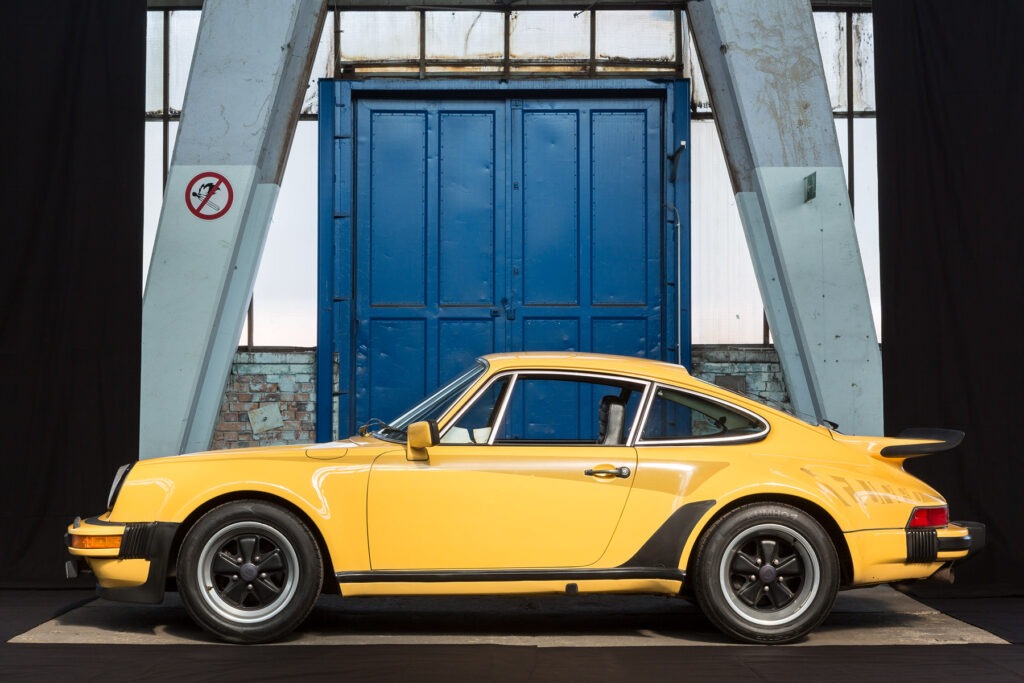
It has become common practice to refer to the first generation of the Porsche 911, which rolled off the production line in Stuttgart-Zuffenhausen between 1965 and 1973, as the F model or F series. The second generation, produced between 1974 and 1989, is referred to as the G model or G series. These designations are not actually correct, as Porsche had already begun assigning a letter to each model year in 1968: the 1968 model year was therefore the A series, followed by the B series in 1969 and the C series in 1970.
Production of the first generation ended with the F series in the 1973 model year, in that order of designation. Since the second generation of the 911 started as the G series in the 1974 model year, the two generations were henceforth distinguished from each other by referring to the previous model years 1965 to 1973 as the “F model” and the following model years 1974 to 1989 as the “G model.” This designation, which spans model years, is not actually correct, but it is nevertheless understandable with a certain logic. And so the two terms “F series” and “G series” became established in common parlance to distinguish between the two generations.
But let’s go back to the beginning. The first Porsche 911 rolled off the production line on September 14, 1964, still as the Type 901. A total of 82 vehicles were produced under the designation 901. Peugeot vetoed this, as at least on the French market, three-digit numbers with a zero in the middle could only be used exclusively by the French car manufacturer. Porsche reacted immediately and renamed the new sports car “911” for all markets. To this day, Ferdinand Alexander Porsche’s design of the original 911 is considered a landmark in automotive design.
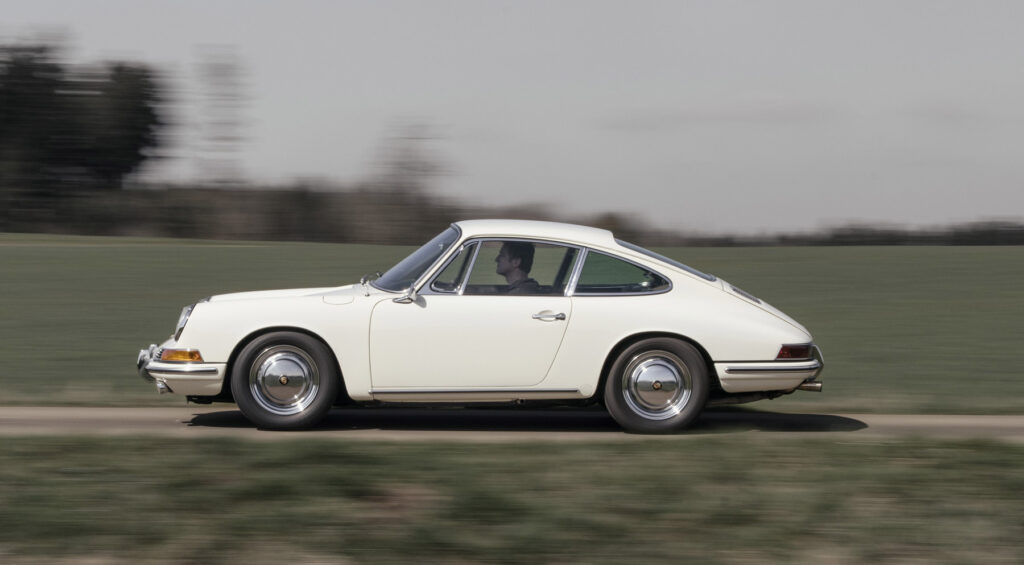
The base engine of the new Porsche started with the highest power rating ever seen in the previous 356 model: 130 hp helped the new Porsche reach a top speed of 210 km/h—figures that were out of this world for the time.
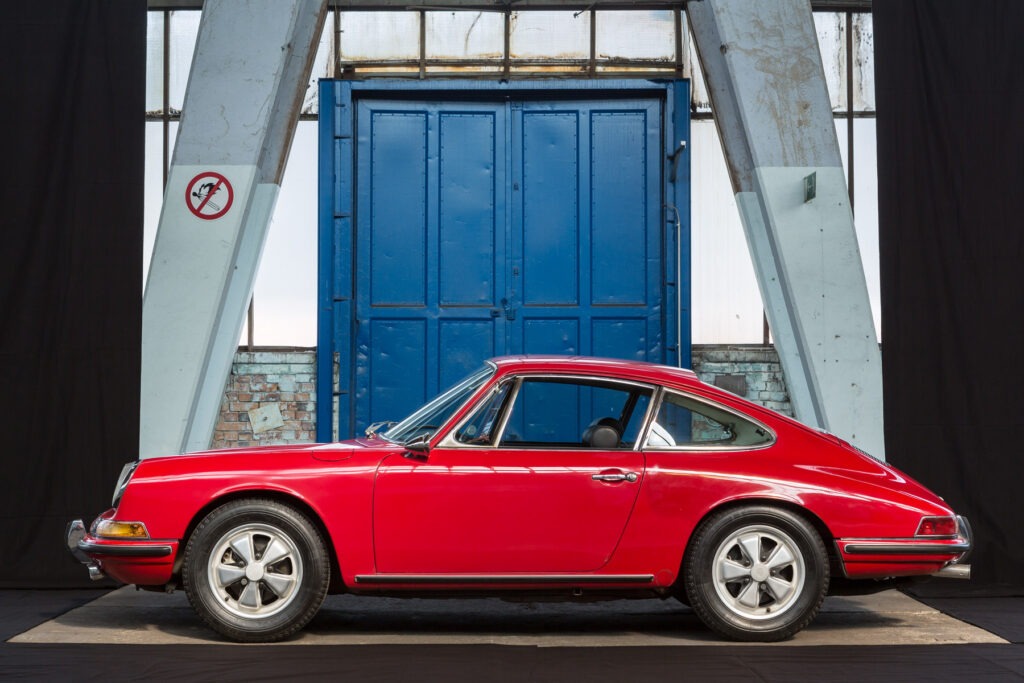
The 1967 model year became a real milestone in the history of the Porsche 911, as the Zuffenhausen-based company fulfilled a major customer request with the first sports version. With 160 hp, the 911 S reached exactly 225 km/h and was the first to feature forged alloy wheels from Fuchs. In addition to its increased power, the 911 S also received a modified chassis and a more powerful braking system.
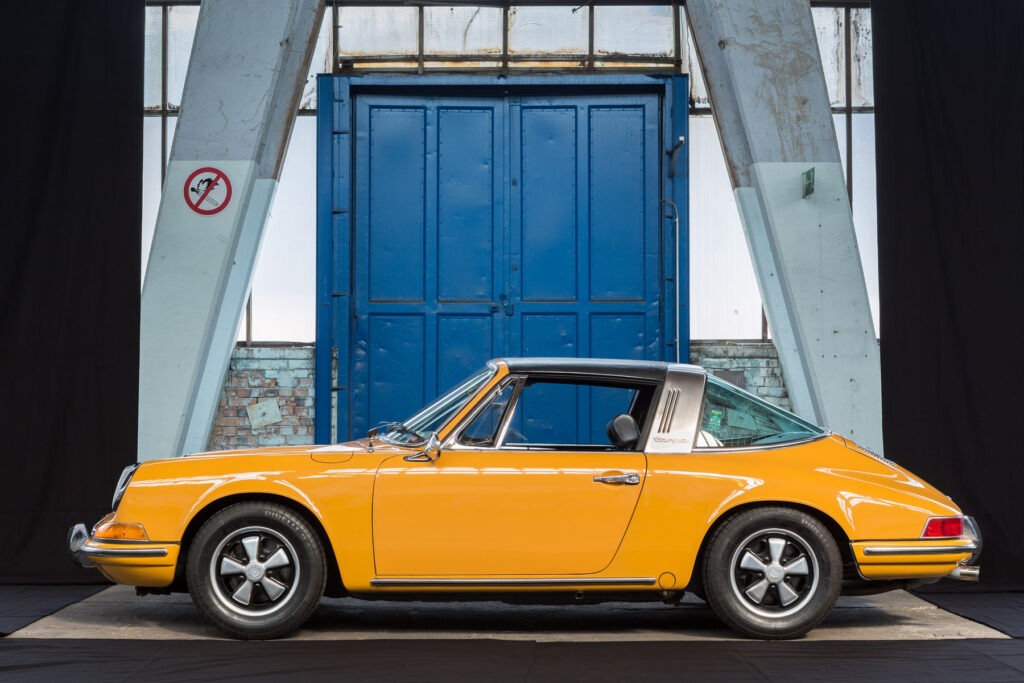
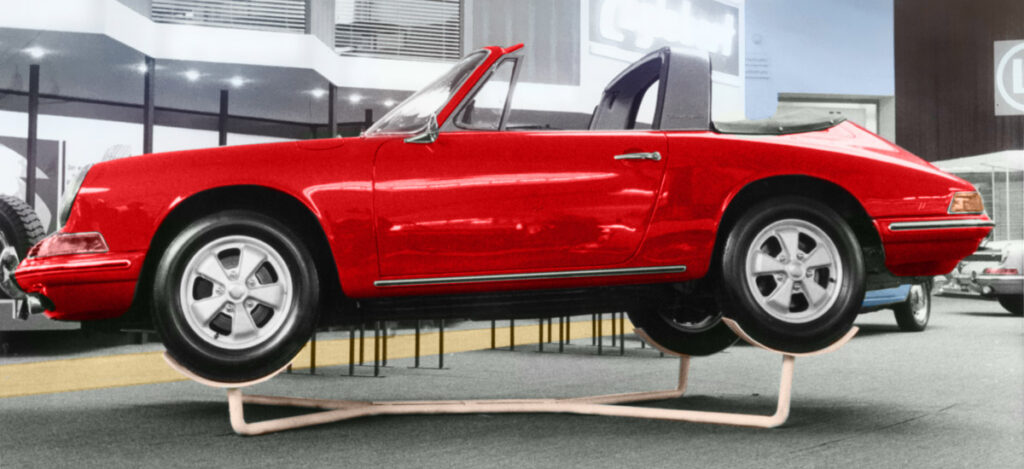
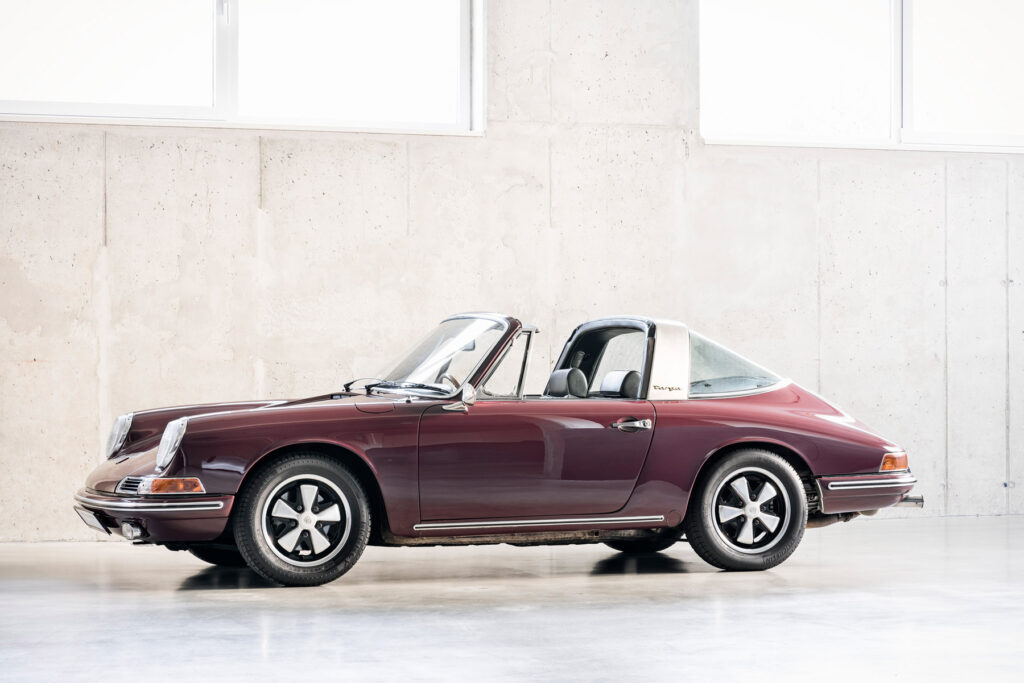
The Targa version was added to the sales range in the 1967 model year – another milestone in the history of the Porsche 911. The world’s first safety convertible was launched at the end of 1966 and became a design icon with its distinctive stainless steel roll bar. F. A. Porsche and his team were also responsible for the design of the 911 Targa. The 911 Targa was presented a year earlier at the 1965 IAA in Frankfurt.
But Porsche was also way ahead of the competition when it came to technical innovations: the Sportomatic, a semi-automatic four-speed transmission, was available in the 911 from 1967 onwards.
Starting with the 1968 model year, the Porsche 911 was offered in three different performance levels for the first time. The new entry-level model in the world of the 911 was now the new basic version, the 911 T – the abbreviation standing for “Touring.” Although the 911 T had a reduced output of 110 hp, unlike the Porsche 912 it was offered with the high-quality six-cylinder boxer engine and the identical displacement of 1,991 cc.
The 911 with 130 hp was now renamed 911 L – standing for “luxury.” The top model remained the 911 S with 160 hp. The 1968 model year saw the Porsche 911 produced with a short wheelbase (SWB) for the last time.
The 1969 model year was a transitional year for technology and bodywork: for the first time, major changes were made to the engine and bodywork. Starting with the so-called B series, the wheelbase was extended, which also necessitated the use of new fenders. The 911 E and 911 S were the first to feature modern fuel injection. Only the entry-level 911 T retained the carburetor engine. The 1969 model year was the last time the 911 series was built with a two-liter displacement.
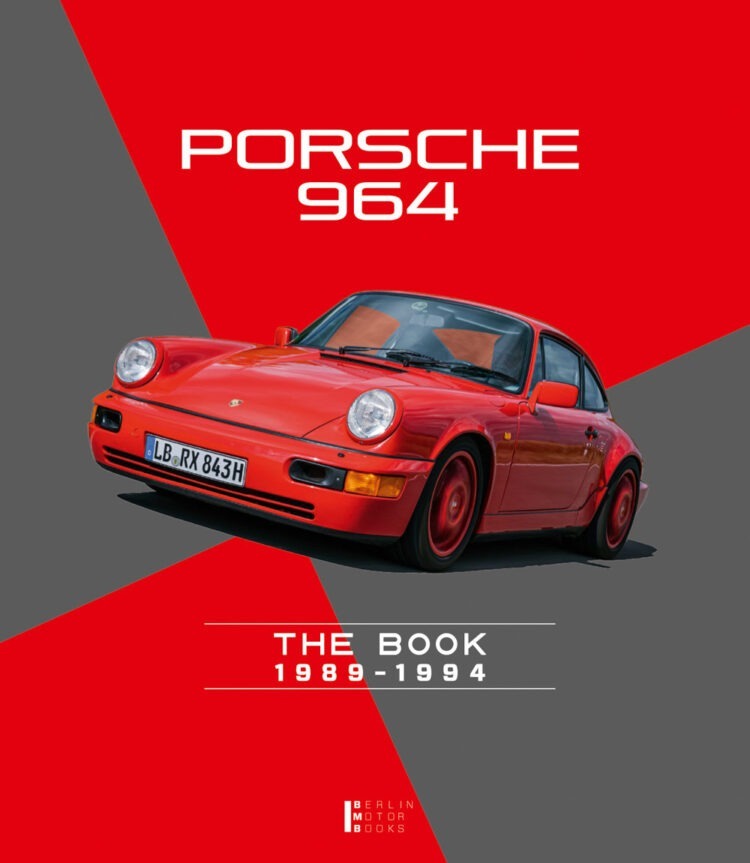
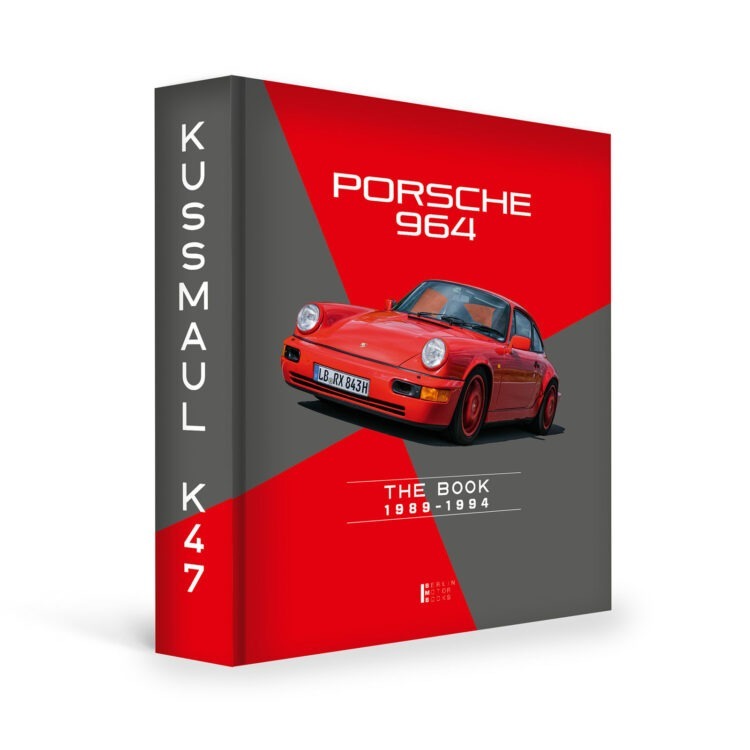
PORSCHE 964 – THE BOOK – EDITION KUSSMAUL K47
In February 1991, Porsche announced a true sensation to the press: the new 964 RS. The rightful successor to the legendary 1973 Carrera RS was scheduled for release in the summer of 1991. In honor of 964 RS developer Roland Kussmaul, the special edition “KUSSMAUL K47” is being released to mark the 35th anniversary of this icon, in a limited run of 260 copies. “260” as in the horsepower rating of the 964 RS.
Special features in this book
- Limited to just 260 copies
- Each copy is individually numbered
- All RS series models: 964 RS 3.6, 964 RS 3.6 Touring, 964 RS America, 964 RS 3.8
- All racing variants: 964 Cup, 964 N-GT, 964 RSR 3.8
- The 964 in motorsports with Herbert Linge and the Carrera Cup
- 4 in-depth buying guides for the 964 RS, 964 Turbo 3.3/3.6, 911 Carrera 2, and Carrera 4 models
- Presentation of unknown prototypes
- Virtually Unknown Sales Brochures
- All list prices from 1989 to 1994
- Trends in used car prices for all 964 models between 2018 and 2026